Guest post for The Green Londoner
Author: Marie Geneste
Marie Geneste is an entrepreneur leading The C Collective, a regenerative design and marketing consultancy. Outside of supporting impact founders, she is an environmental educator and activist, putting her values into action. Based in London’s Islington, she balances it all with her husband and two kids — because saving the world starts at home!
What we eat is one of the most important things we can do for our own health, our family’s well-being, and the planet.
However, when you step into your local London supermarket, most of the food sold there is bad for you and the planet. Fruit and vegetables are often wrapped in plastic and shipped from far away, with strawberries and tomatoes available no matter the season. Overall, there are few organic options on the shelves.
This is just the tip of the iceberg of a global food system that is fundamentally detrimental to both human and planetary health.
But it’s not enough to criticise the system — we also need to come together and create new ones. Food groups are one of them.
Before starting this food group adventure, I was already sourcing fruit and veg from the wonderful cooperative business Riverford, had been a long-time client of the zero-waste van Fair-Well, and regularly visited London farmers’ markets. I wanted to increase my impact by inspiring more friends and neighbours to act, while reducing the cost and time associated with sourcing quality, organic supplies and limiting waste.
So, I started a food group with my Islington friends and neighbours to source quality, mostly organic food and household supplies in bulk at wholesale prices.
How it works
I suggested the idea to some neighbours and friends in Islington in 2025. We’re now around 12 families buying regularly, but I reckon five families per order would already be enough to justify bulk quantities.
I did some research and found that Suma — a well-known supplier to many health food and bulk stores — also sells to food groups. They offer a vast range of dry goods, from breakfast cereals to rice and pulses, as well as dairy products and cleaning supplies.
I created a group-buy account with the Suma cooperative. You need to call them so they can validate the account, but the whole process takes no more than 30 minutes.
Every other month, we fill in a shared spreadsheet (you can use this template to start your own group) with our desired items and quantities. The group leader then rounds up the order so that bulk items — like a 10kg bag of porridge — are fully used. There’s usually a minimum quantity of 1kg per item, which works well as most group members have families of four.
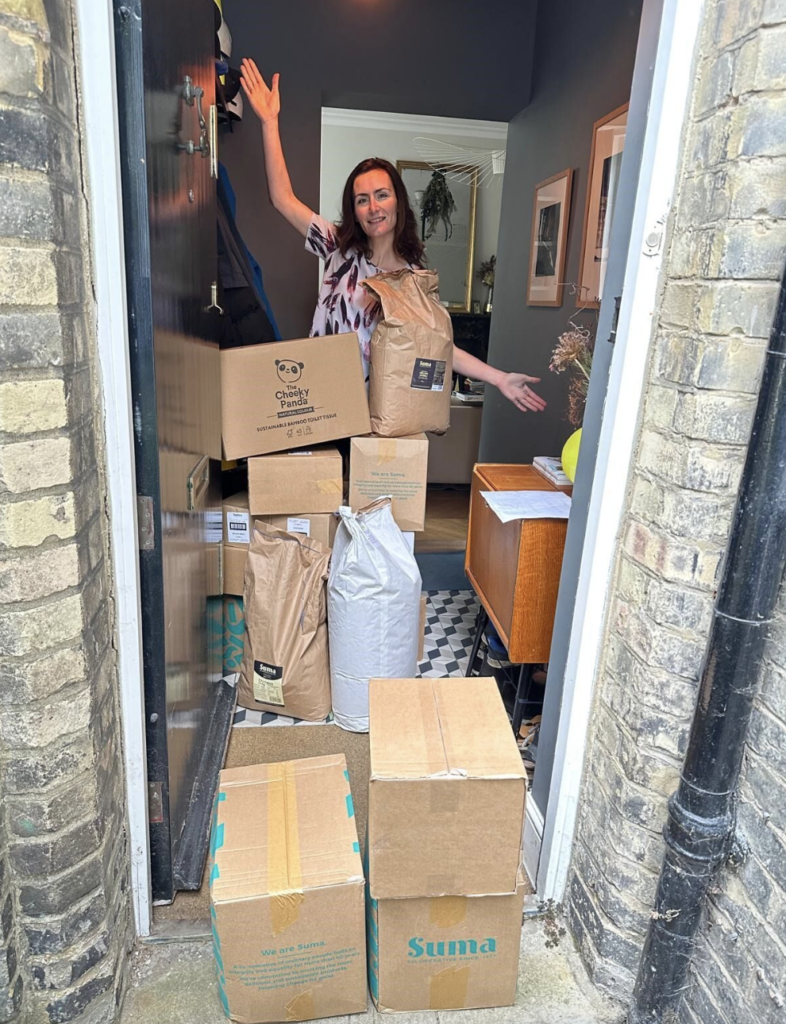
The group leader collects the money and places the order. With a minimum order of £350, the delivery usually arrives one or two days later, depending on local delivery schedules.
The unpacking and distribution is the most fun part. On delivery day (or shortly after), we get together, bring containers, split the treasure trove, and share lentil or bean recipes — sometimes around a drink.
Six reasons to start your own food group
1. Good for your health and the environment
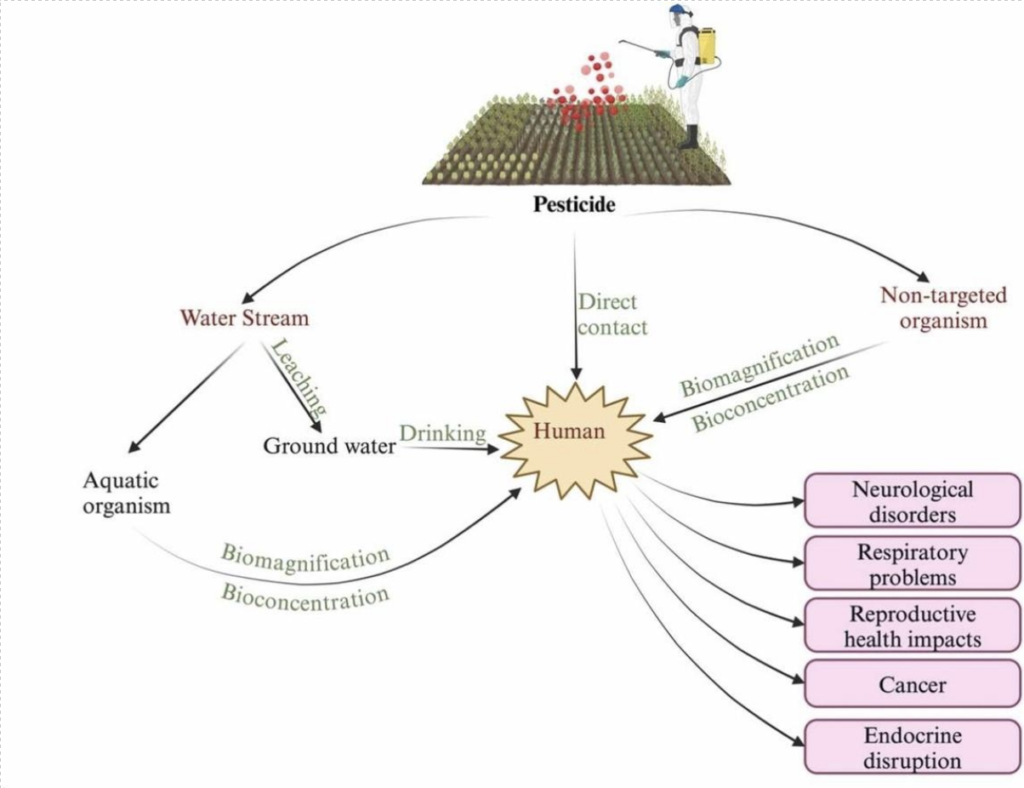
Research shows that exposure to a cocktail of synthetic pesticides in our food and environment is linked to an increased risk of cancer and other diseases, including among children and young adults. Consuming organic food is one of the best ways to protect your family.
Supporting organic farming practices — without chemical pesticides and fertilisers — also helps reduce biodiversity loss, greenhouse gas emissions, and soil erosion.
2. Buy quality products at wholesale prices
Organic food is often harder to source and more expensive — largely because environmental and health costs are externalised, but that’s another story.
Suma mainly supplies businesses such as supermarkets and hospitality venues, where large quantities are the norm. Prices are lower because food groups buy in bulk — sometimes up to 25kg bags of rice or flour — and at wholesale rates. Retailers typically apply around a 20% mark-up to Suma prices.
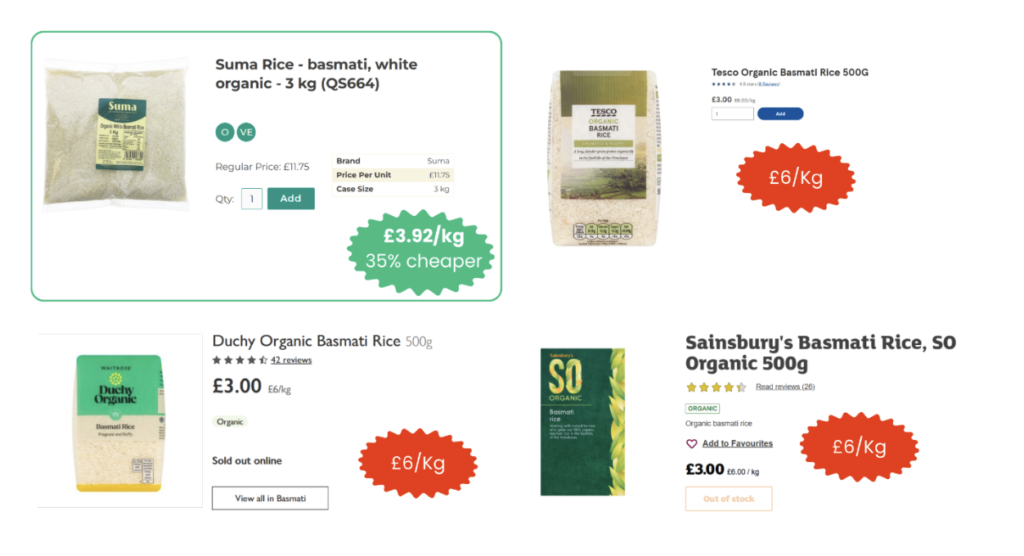
In our case, staple foods are around 30% cheaper than in conventional supermarkets.
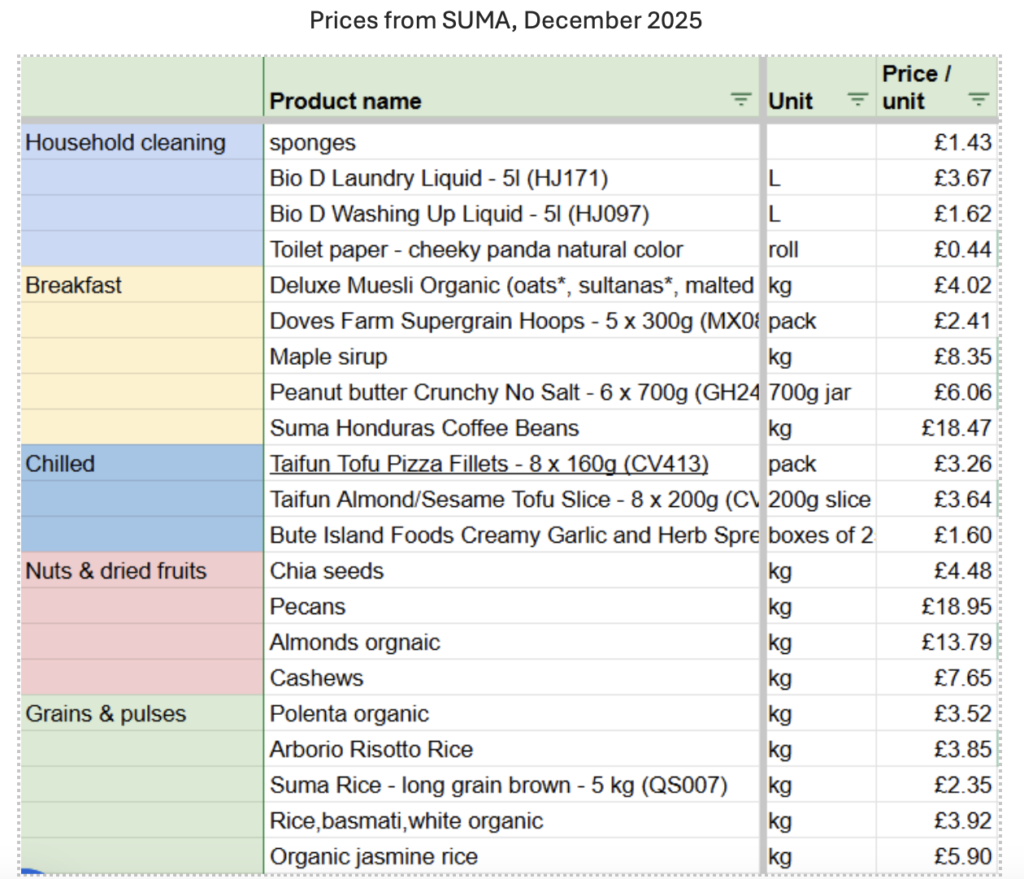
As this sample price list shows, our food group makes quality, organic food significantly more affordable.
3. Reduce packaging waste
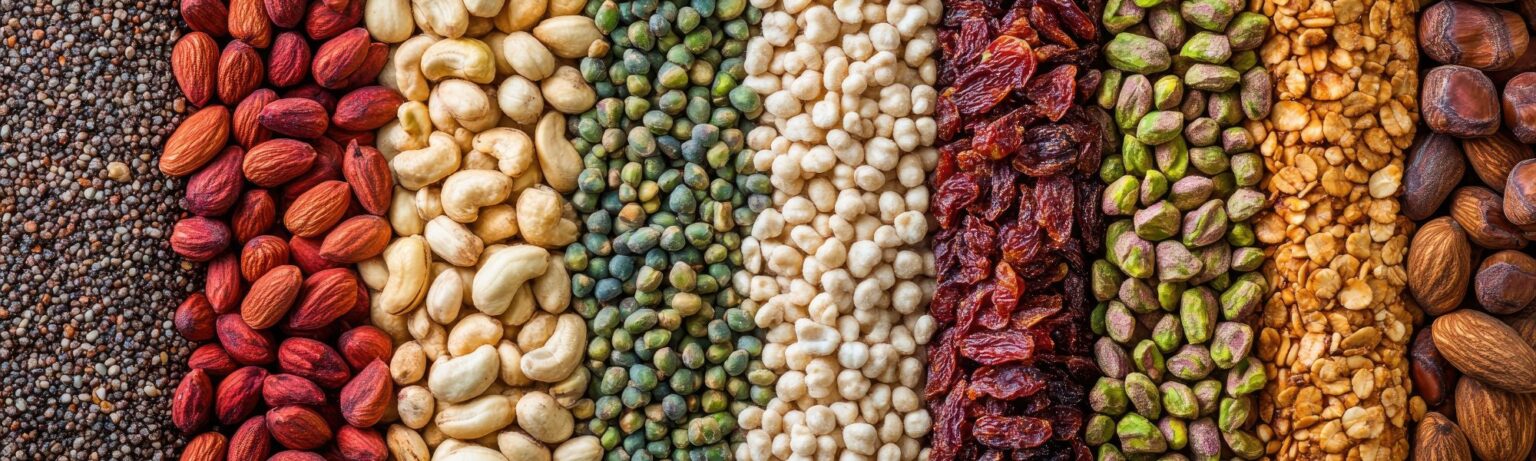
While some items are available in standard supermarket-sized multipacks, many cupboard and cleaning products come in large formats — such as a 10kg bag of porridge, 5L of white vinegar, 3kg of rice, or 1kg of dried mango slices. These formats significantly reduce overall packaging waste.
4. Shop less often
Having large quantities delivered every six to eight weeks means fewer weekly shopping trips — and you’re already well stocked if there’s a disruption or crisis 😊
5. Share the love of good food
Food is one of the best ways to bring people together. It’s about giving, sharing, and nourishing both bodies and souls. In our group, we often exchange recipes — and sometimes cakes — made with the ingredients we’ve sourced together.
6. Support champions of fair and sustainable food supply chains
For over 40 years, Suma has been supplying vegetarian and sustainable goods, operating as “a co-operative of ordinary people built on integrity and equality […], a business owned and run by the nearly 200 people who work there.”
Buying organic food also helps create stable markets for organic producers and protects farmers’ health — as well as that of their neighbours — by reducing direct exposure to pesticides.